
Table of Contents
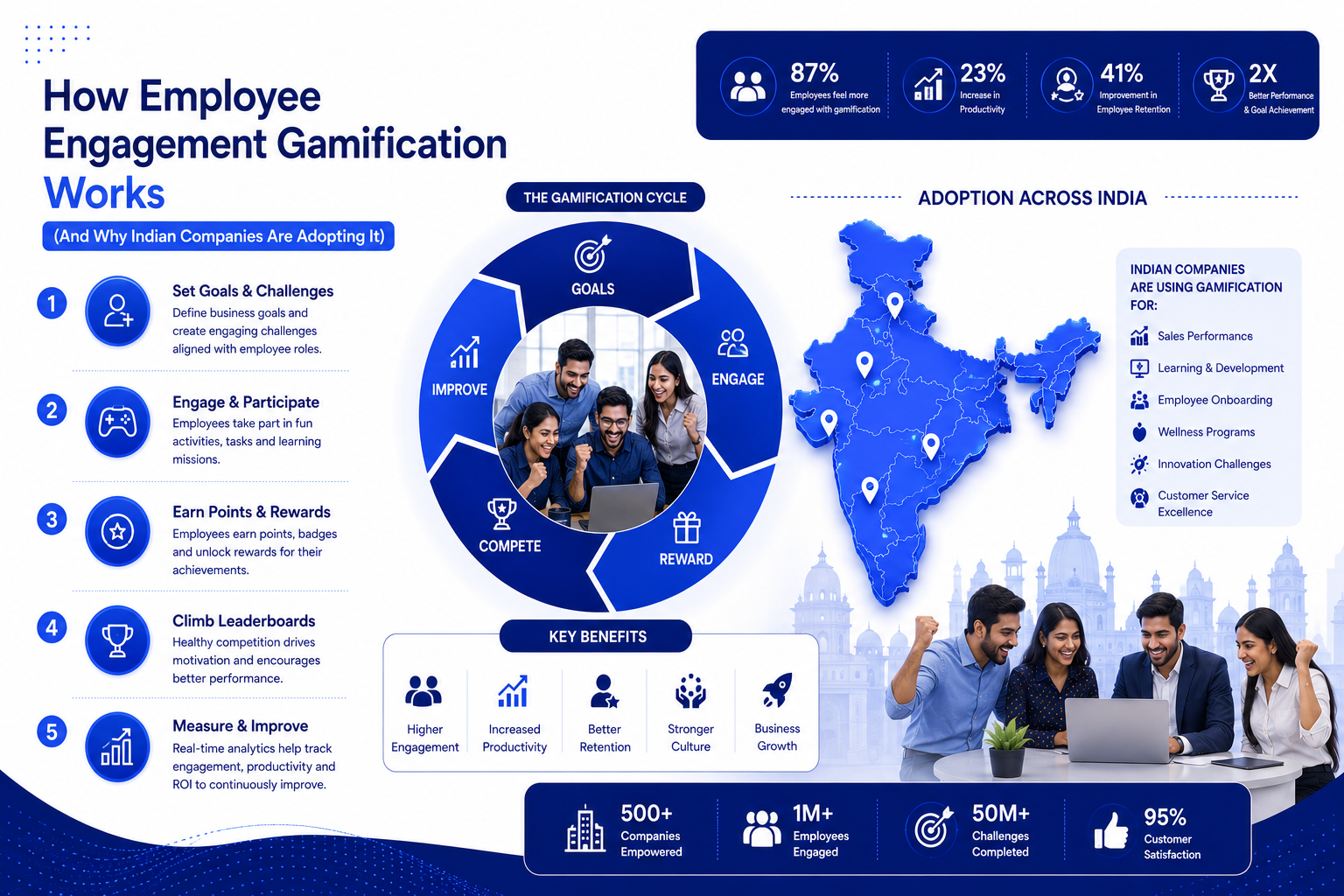
How Employee Engagement Gamification Works (And Why Indian Companies Are Adopting It)
Employee disengagement is a silent productivity killer. Studies consistently show that the majority of employees globally are not actively engaged at work — and India is no exception. The cost shows up in missed targets, high attrition, and a culture that nobody talks about positively.
Gamification is one of the most effective tools HR leaders are deploying in 2026 to change this. Here is how it works and what results Indian organisations are seeing.
What is Employee Engagement Gamification?
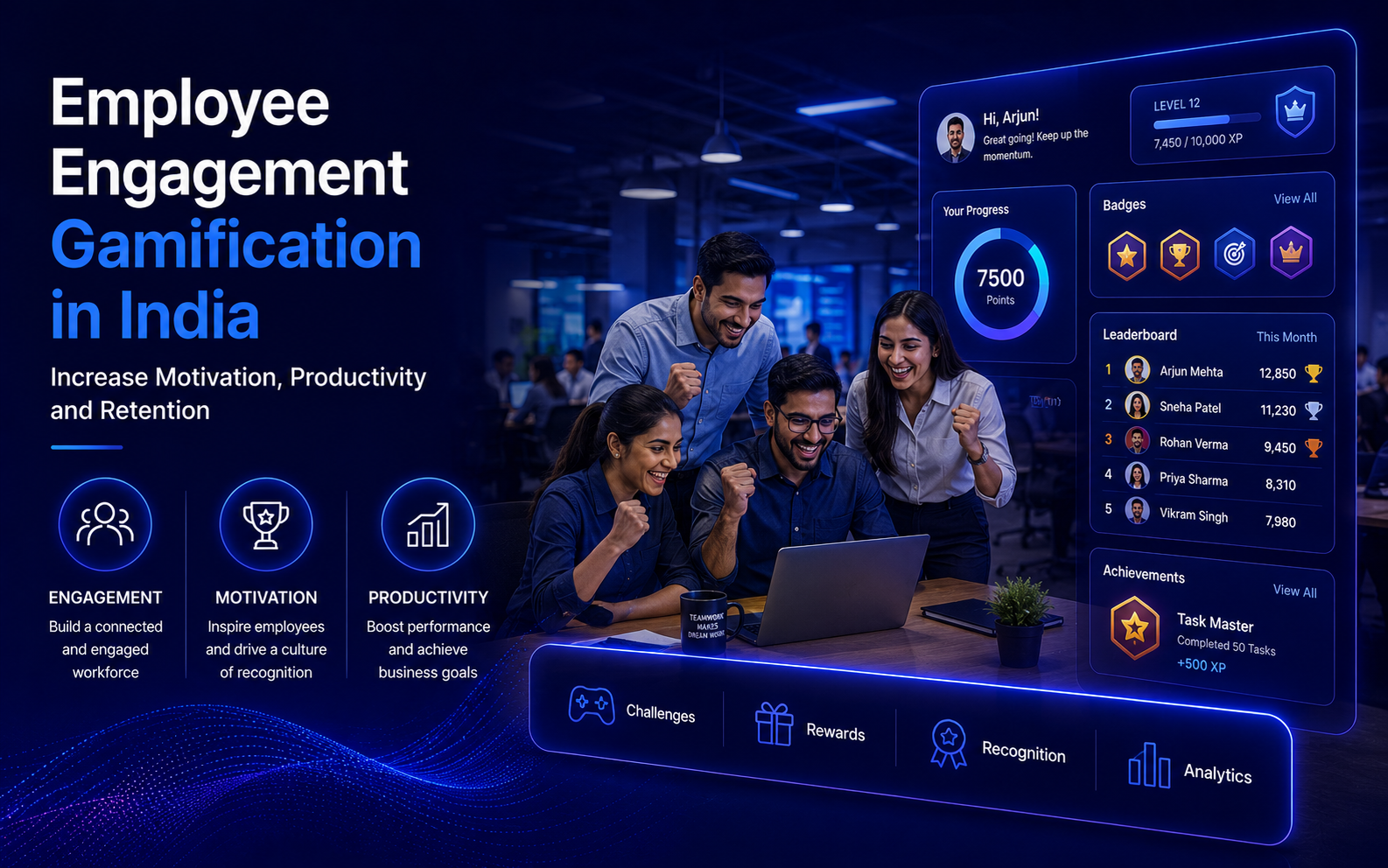
Employee engagement gamification applies game mechanics — points, levels, badges, leaderboards, challenges, and rewards — to workplace activities. This includes training programs, onboarding, performance tracking, peer recognition, and internal competitions.
The goal is not to make work feel like a video game. The goal is to make effort visible, achievement rewarding, and participation intrinsically motivated.
Employee engagement gamification is the practice of applying game mechanics such as points, badges, leaderboards, levels, rewards, and challenges to workplace activities. These elements encourage employees to participate more actively in training programs, onboarding processes, performance initiatives, and team-building activities.
Unlike traditional employee engagement programs, gamification creates immediate feedback and recognition, helping employees stay motivated while contributing to organizational goals.
5 Ways Indian Companies Are Using It
1. Gamified Onboarding
New joiners complete onboarding modules as a series of missions. Each completed task unlocks the next level. By day 30, they have covered compliance, culture, and role-specific training — without sitting through a single boring presentation.
2. Learning & Development Games
Sales training, compliance modules, and product knowledge are turned into interactive quiz games with team leaderboards. Completion rates jump from under 40% to over 85% when learning is gamified.
3. Performance Leaderboards
Sales teams, customer support agents, and field staff respond well to live leaderboards showing real-time performance rankings. Healthy competition drives output — especially when paired with meaningful rewards.
4. Team Building Experiences
Multiplayer web games and interactive challenges run during team offsites or virtual meetings create shared experiences that build culture faster than any workshop.
5. Peer Recognition Systems
Point-based peer recognition lets employees award each other for collaboration, initiative, and values alignment. Points accumulate toward rewards — creating a culture where good behaviour is consistently reinforced.
5 Ways Indian Companies Are Using Employee Engagement Gamification
1. Gamified Employee Onboarding
Modern onboarding programs use missions, milestones, and rewards to guide new employees through company policies, culture, compliance requirements, and role-specific training.
Benefits include:
- Faster onboarding completion
- Better knowledge retention
- Improved employee experience
- Reduced onboarding costs
2. Gamified Learning and Development
Organizations are transforming traditional training modules into interactive experiences through quizzes, challenges, simulations, and achievement systems.
Popular applications include:
- Sales training
- Product knowledge training
- Compliance learning
- Leadership development
Companies often report significantly higher training completion rates when learning programs are gamified.
3. Performance Leaderboards and Recognition
Real-time leaderboards help employees track performance and celebrate achievements. Sales teams, customer support representatives, and field employees particularly benefit from transparent performance tracking.
Common leaderboard metrics include:
- Sales targets achieved
- Customer satisfaction scores
- Training completion rates
- Productivity milestones
4. Team Building Through Interactive Challenges
Many organizations use multiplayer web-based games and collaborative challenges during team-building activities, virtual events, and corporate offsites.
These experiences encourage:
- Collaboration
- Communication
- Problem-solving
- Cross-functional teamwork
5. Peer Recognition and Reward Systems
Peer-to-peer recognition platforms allow employees to award points and badges for collaboration, innovation, and company values.
Benefits include:
- Stronger workplace culture
- Increased employee appreciation
- Higher morale
- Better employee retention
How to Successfully Implement Employee Engagement Gamification
To maximize results, organizations should:
- Define clear business objectives.
- Align rewards with employee motivations.
- Keep game mechanics simple and transparent.
- Encourage collaboration as well as competition.
- Continuously measure participation and outcomes.
Successful gamification programs focus on meaningful engagement rather than simply awarding points.
What Results Can You Expect?
Organisations that implement gamification in employee engagement typically report higher training completion rates, improved retention among high performers, stronger culture scores in internal surveys, and measurably better onboarding experiences for new hires.
Build an Employee Engagement Game for Your Organisation
Quitebox Tech Labs designs and builds custom employee engagement games, gamified training platforms, and internal leaderboard systems for Indian organisations of all sizes. Get in touch for a free consultation.
Call to Action
Quitebox Tech Labs designs and develops custom employee engagement games, gamified training platforms, employee recognition systems, and interactive workplace experiences for organizations across India. Contact us today for a free consultation and discover how gamification can transform your workplace culture.
Leave a comment: